Practicing another culture’s rules of etiquette has which of the following effects?
If you’re ready to install a new fence and want professional guidance, consider Wulff Fence. Our expert team offers top-notch services and can help you choose the best options for your needs https://learnchinesegrammar.com/shazam-casino/. Contact Wulff Fence, one of the leading fence companies in Orlando, today to schedule an appointment. Let’s build something great together!
Regardless of the unique nuances of your fence dilemma, Gottsman says taking the right approach with neighbors is always the best way to start. “Communicate kindly and positively in order to make a responsible decision which will affect other people,” she says. “The quote ‘Good fences make good neighbors’ implies a respect for boundaries and the people living behind the fence.”
When building or replacing a fence, your HOA may have a lot to say about style and material. Your local government may have a lot to say about height and other requirements. But you should also take care to keep your fence in line with the look and feel of the neighborhood. Yes, it’s your property to do with as you will (within reason), but fences are weirdly shared aspects of your property. The courteous thing to do is to blend yours in with the rest.
Taking Down Trees – Gottsman advises taking care that your trees don’t droop or hang into the neighbor’s yard leaving a mess of berries, leaves, and pinecones underneath. Your trees should be your own yard’s problem, but draw the line when they start affecting those around you.
Every municipality and homeowners association has its own fencing regulations—from height restrictions and material guidelines to placement and permit requirements. Ignoring the rules could mean fines or having to tear down the fence.
10 rules of online etiquette
Finally, don’t sign up for newsletters and other communications using someone else’s information. It’s simple enough to set up your own email account or supply your own number for texting, and can protect you from irritating friends by having them receive emails or texts they don’t want.
Proper etiquette is nothing new for most people. You grew up with your parents constantly telling you to mind your manners. But in a digital age where the unwritten online “rules” are constantly changing, proper “netiquette” may seem a bit mystifying. Add in the atmosphere of an online classroom, and suddenly the proper netiquette guidelines don’t seem as easy as a simple “please” and “thank you.”
Finally, don’t sign up for newsletters and other communications using someone else’s information. It’s simple enough to set up your own email account or supply your own number for texting, and can protect you from irritating friends by having them receive emails or texts they don’t want.
Proper etiquette is nothing new for most people. You grew up with your parents constantly telling you to mind your manners. But in a digital age where the unwritten online “rules” are constantly changing, proper “netiquette” may seem a bit mystifying. Add in the atmosphere of an online classroom, and suddenly the proper netiquette guidelines don’t seem as easy as a simple “please” and “thank you.”
Netiquette is important for a number of reasons. Following netiquette helps enhance relationships with people you care about while protecting your professional reputation. Practicing online etiquette can even reduce cyberbullying. Proper online information-sharing strategies are essential to protecting other people’s privacy and safeguarding your sensitive information.
One netiquette rule that can help set boundaries for your own well-being is to consider reducing the number of social media accounts you use. “You don’t realize that’s an extra stressor you’re putting in your life,” Halbert says. “When you’ve got multiple accounts, you have to check this one, you’ve got to check that one, you’re afraid of leaving someone out, people are waiting on your response, what do they think about your response?” All of this adds extra stress.
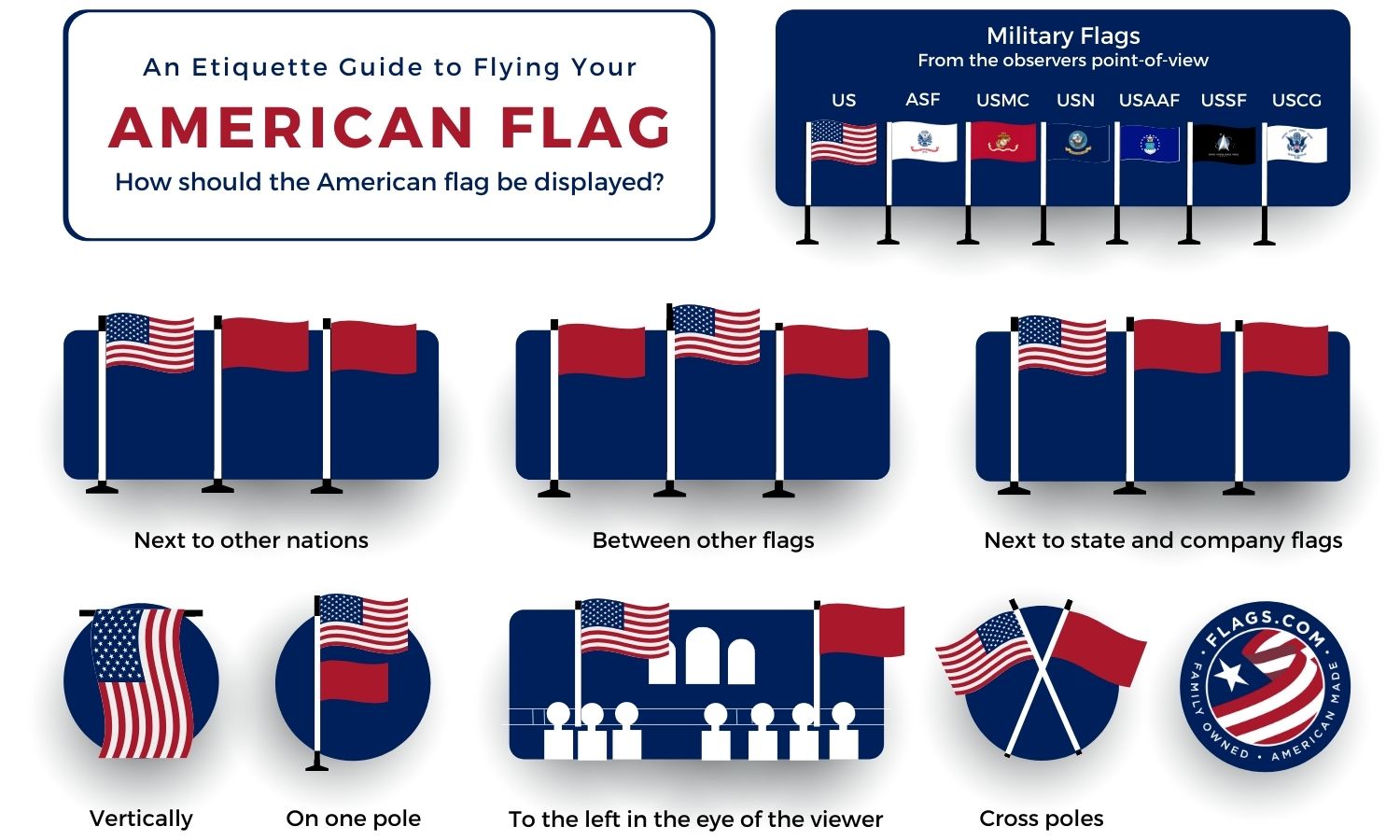
What are the 7 rules of flag etiquette
During the ceremony of hoisting or lowering the flag or when the flag is passing in a parade or in review, those present in uniform should render the military salute. Members of the Armed Forces and veterans who are present but not in uniform may render the military salute. All other persons present should face the flag and stand at attention with their right hand over the heart, or if applicable, remove their headdress with their right hand and hold it at the left shoulder, the hand being over the heart. Citizens of other countries should stand at attention. All such conduct toward the flag in a moving column should be rendered at the moment the flag passes.
(d) The flag should be displayed on all days, especially on New Year’s Day, January 1; Inauguration Day, January 20; Martin Luther King, Jr.’s birthday, the third Monday in January; Lincoln’s Birthday, February 12; Washington’s Birthday, third Monday in February; National Vietnam War Veterans Day, March 29, Easter Sunday (variable); Mother’s Day, second Sunday in May; Armed Forces Day, third Saturday in May; Memorial Day (half-staff until noon), the last Monday in May; Flag Day, June 14; Father’s Day, third Sunday in June; Independence Day, July 4; National Korean War Veterans Armistice Day, July 27; Labor Day, first Monday in September; Constitution Day, September 17; Columbus Day, second Monday in October; Navy Day, October 27; Veterans Day, November 11; Thanksgiving Day, fourth Thursday in November; Christmas Day, December 25; and such other days as may be proclaimed by the President of the United States; the birthdays of States (date of admission); and on State holidays.
It may appear as if there are an overwhelming number of guidelines below; however, this article has become longer over time to answer the many questions that come up. You will see more questions from readers in the comments!
During the ceremony of hoisting or lowering the flag or when the flag is passing in a parade or in review, those present in uniform should render the military salute. Members of the Armed Forces and veterans who are present but not in uniform may render the military salute. All other persons present should face the flag and stand at attention with their right hand over the heart, or if applicable, remove their headdress with their right hand and hold it at the left shoulder, the hand being over the heart. Citizens of other countries should stand at attention. All such conduct toward the flag in a moving column should be rendered at the moment the flag passes.
(d) The flag should be displayed on all days, especially on New Year’s Day, January 1; Inauguration Day, January 20; Martin Luther King, Jr.’s birthday, the third Monday in January; Lincoln’s Birthday, February 12; Washington’s Birthday, third Monday in February; National Vietnam War Veterans Day, March 29, Easter Sunday (variable); Mother’s Day, second Sunday in May; Armed Forces Day, third Saturday in May; Memorial Day (half-staff until noon), the last Monday in May; Flag Day, June 14; Father’s Day, third Sunday in June; Independence Day, July 4; National Korean War Veterans Armistice Day, July 27; Labor Day, first Monday in September; Constitution Day, September 17; Columbus Day, second Monday in October; Navy Day, October 27; Veterans Day, November 11; Thanksgiving Day, fourth Thursday in November; Christmas Day, December 25; and such other days as may be proclaimed by the President of the United States; the birthdays of States (date of admission); and on State holidays.
It may appear as if there are an overwhelming number of guidelines below; however, this article has become longer over time to answer the many questions that come up. You will see more questions from readers in the comments!
